Community engagement · Partnerships · Programme delivery
Window Shopping: neighbourhood partnerships and delivery
A neighbourhood programme connecting local businesses, participants and creative partners through engagement, coordination and practical delivery.

Visit the Window Shopping website ↗
An exhibition built around the neighbourhood
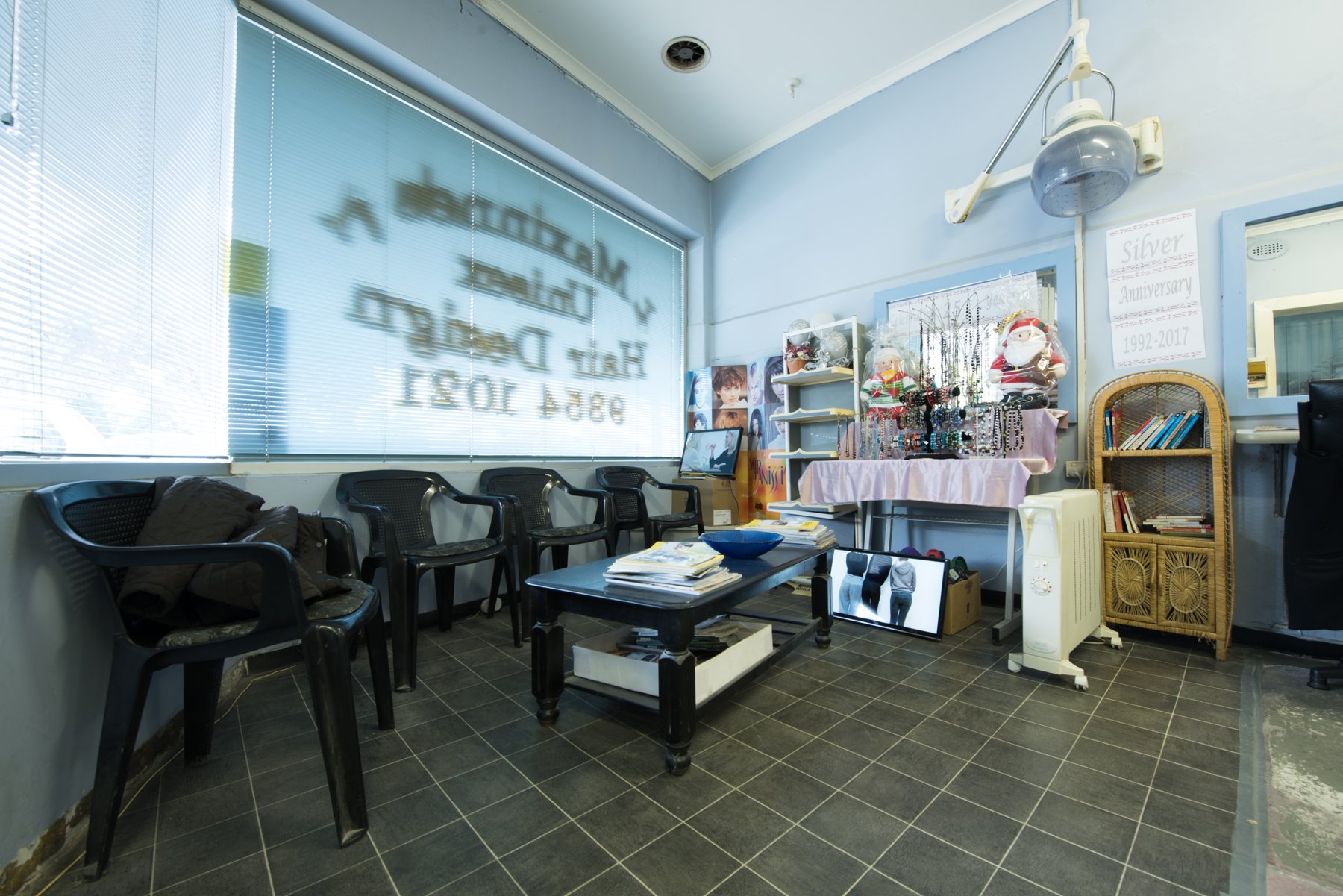
Alisha Abate conceived and curated the first Window Shopping exhibition for Melbourne Fringe in 2017. Working along Merlyn Street and Lorensen Avenue in Merlynston, Coburg North, she brought contemporary artists into shops, studios and other former retail spaces that already held their own histories, routines and relationships.
The starting point was a practical and cultural question: what happens when artists work with the spaces a neighbourhood already has? Rather than requiring a conventional gallery, the project made the local shopping strip a setting for encounters between contemporary art and everyday community life.
Beginning with the life of the shopping strip
Window Shopping brought artists into conversation with the businesses that hosted their work. Shop windows, interiors and the spaces between them became settings for creative activity, alongside the existing routines of customers and shop owners.
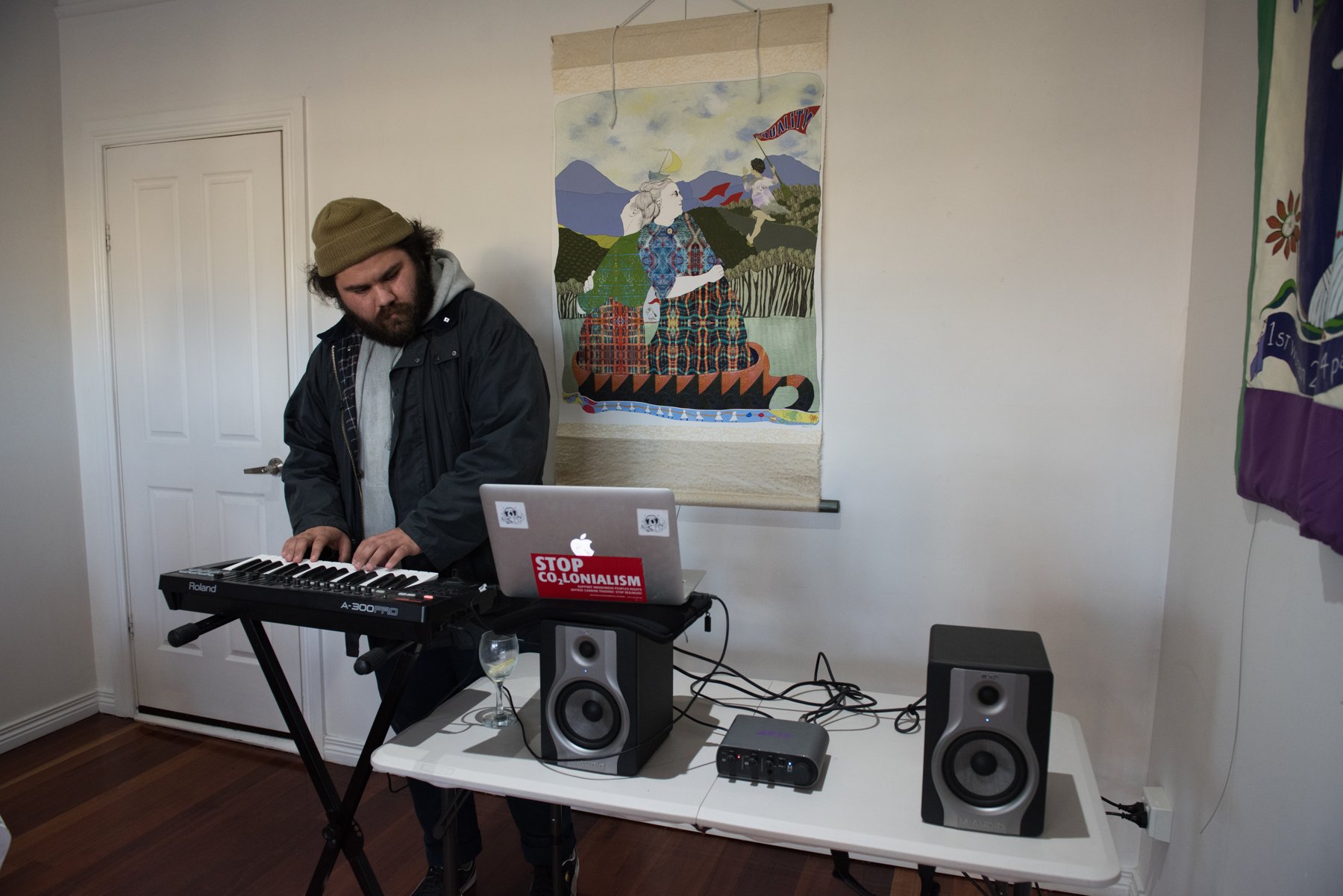
The first iteration explored how art could be encountered through familiar places rather than requiring a visit to a gallery. The photographs here document that early programme: installations, performance and everyday business activity sharing space.
Artists and the spaces they worked with
Across the 2017 Merlynston programme, artists responded to the character of each host space: its windows, shelves, furnishings and everyday use.
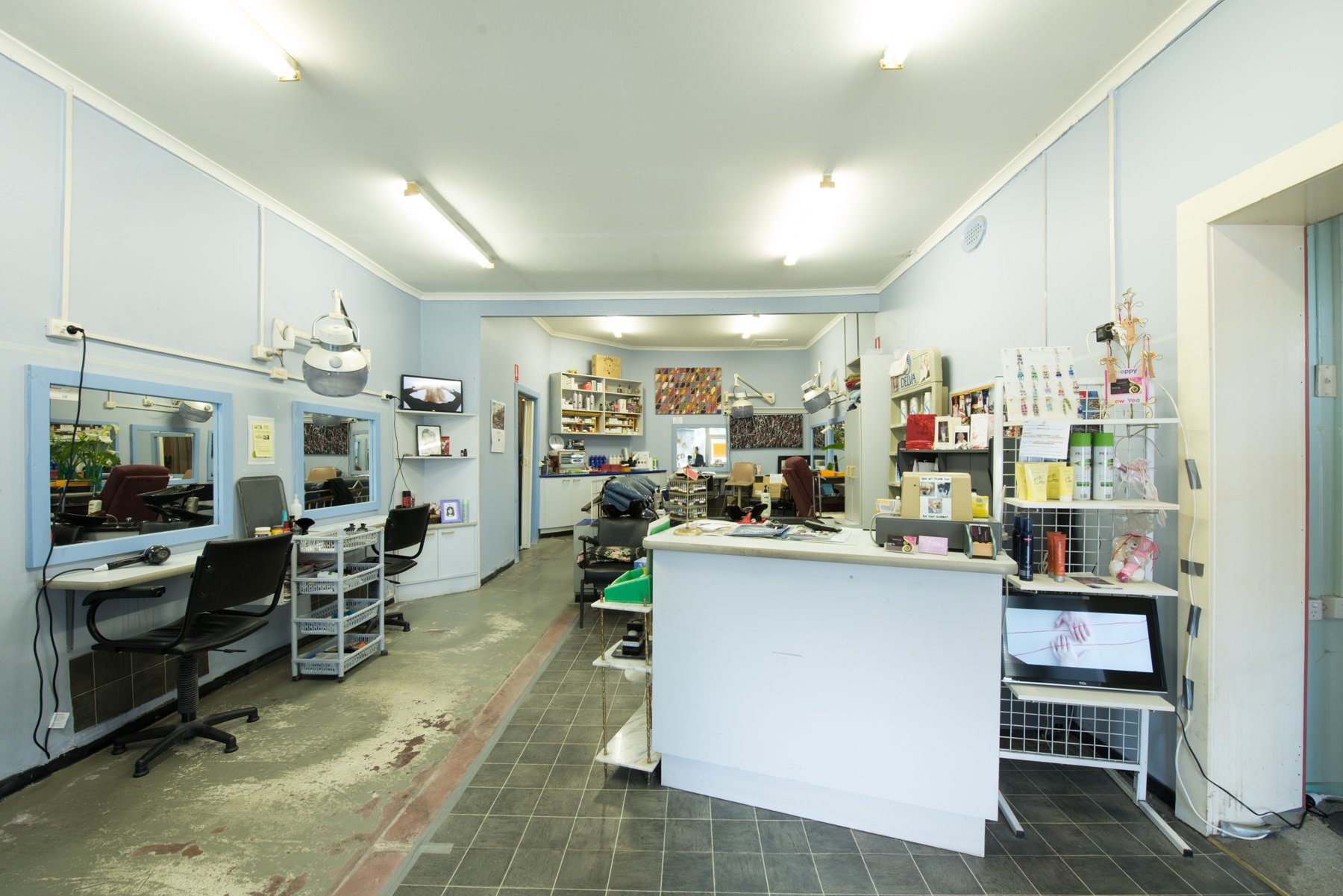
Melody Greatorex — Maxine’s Unisex Hair Design
Performance and video explored connection and support within female relationships. Installed within the salon, the work brought gestures of trust and vulnerability into a place already shaped by personal conversations and everyday care.
Agnes Whalan — The Welcome Shop
Small sculptural assemblages occupied the shop’s existing shelves, alongside its assorted objects. A vacuum pump, a pink switch and found materials connected the artwork with the shop’s displays, inviting attention to touch, value and the ways objects acquire meaning.
Ro Noonan — the local café
A mobile sculptural column made from reclaimed materials introduced painted colour and an unfamiliar object into the café setting. Its wheels and assembled surfaces brought a playful sculptural presence into a space used for everyday social encounters.
Trent Crawford and Bridget Griffiths — the adjoining shopfront and storage space
Both artists responded to the Venetian blinds and the relationship between the street and the interior. Crawford fitted a small motor that slowly opened and closed the blinds, turning an ordinary window mechanism into a subtle moving work encountered by passers-by.
Fern Smith — the community noticeboard and studio setting
Smith’s digital collages appeared on the local noticeboard, placing images concerned with suburban buildings, nature and change among community announcements. The work entered a familiar place where local information was already shared.
Coming together before the exhibition
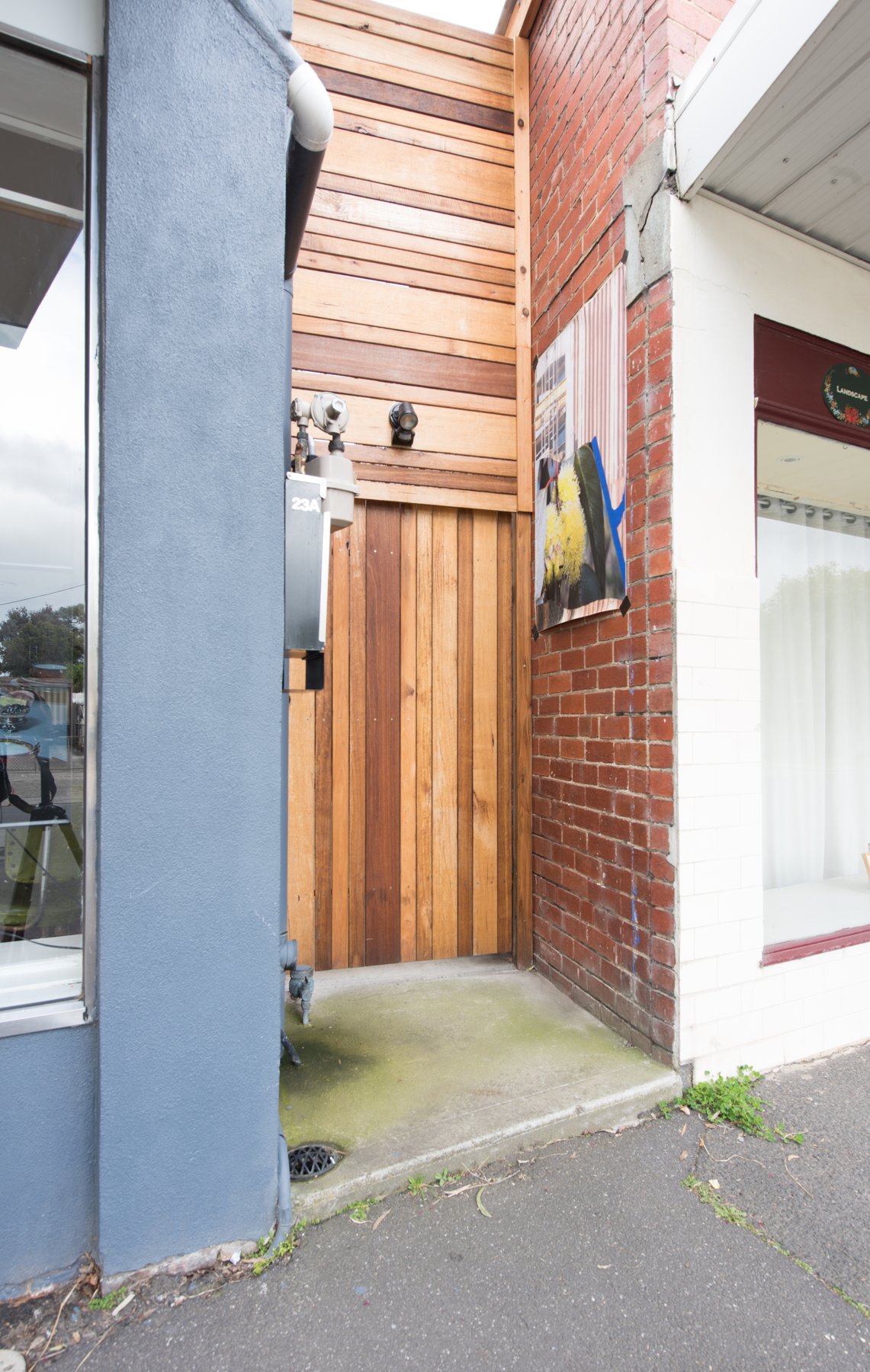
Before installation, the artists met for a facilitated session at Fern Smith’s studio, 23A Lorensen Avenue, on 28 August 2017. The session created space to share the intent of individual artworks and consider how they could connect across the shopping strip.
Facilitators Gill and Paul guided introductions, group agreements, paired conversations and shared presentations. The group then mapped emerging themes and discussed how those relationships could shape individual work plans, ending with outcomes and next steps.
This collective preparation supported a shared direction while allowing each artist to respond to a different business and setting.
Curating through conversation
Alisha’s role extended beyond selecting and arranging artworks. She developed the project, brought artists and local hosts into conversation, and worked with the conditions of each space. The relationship between a shopkeeper, a site and an artist became part of the curatorial process.
A salon, a community noticeboard, a shop shelf and a set of window blinds each offered a different starting point. The artists responded to those settings through sculpture, digital collage and small interventions in the objects and mechanisms already present. The works were shaped by the character of the place, rather than simply installed against a neutral background.
Brigid Hansen’s contemporary response to the exhibition described how viewers needed to enquire and interact with local people to encounter the work fully. That is an important part of the project: the exhibition depended on the people who knew, used and cared for these spaces.
Relationships as part of the work
Bringing a creative programme into operating businesses requires attention to expectations, access, opening hours and installation arrangements. It also relies on conversation and a clear point of contact: the practical work that allows people with different priorities to take part.
This early iteration sits within Soft Infrastructure’s wider interest in place-based practice, community relationships and the conditions that make participation possible.
What this approach contributes to place-based work
Window Shopping demonstrates a way of beginning with local assets: the knowledge, spaces, skills and relationships already present in a neighbourhood. Alisha’s contribution was to create a structure through which those assets could become part of a shared public programme.
The approach connects cultural production with community development. It requires listening, negotiation, coordination and attention to the everyday conditions that allow a project to happen. For organisations working on precincts, public space or community participation, these are practical skills as much as creative ones.
From a first iteration to further work
The Merlynston exhibition was followed by a second Window Shopping programme along Wheatsheaf Road, Glenroy, in 2018. The later programme built on relationships Alisha had developed while working on the Portrait Project sculpture. The photographs in this article document the first iteration; the two exhibitions and the sculpture have distinct contexts.
A separate story: the Wheatsheaf Road sculpture
The building-integrated Portrait Project at 171 Wheatsheaf Road is a distinct artwork. Its story and sculpture photographs are presented separately.
Explore the Wheatsheaf Road sculptureDeveloped from the original Window Shopping planning records, Alisha’s artist CV and Brigid Hansen’s contemporary exhibition response. The 2017 Merlynston exhibition is distinguished here from the 2018 Glenroy programme.
Official information and sources
The council link provides the wider municipal policy context. The project account above draws on Alisha’s own records.